Mike Bates Mike Bates

Swim Upstream

Transmission Double-O-Seven.

I’ll resist the obvious jokes.

But since we’re here, it’s worth saying this:

There’ll be someone reading this today tasked with a different brief.

That tends to happen when you choose a different path.

My wife said this week that is something I’ve always done.

Swim upstream.

Choose the harder path.

Say the thing others are thinking but won’t voice.

Hold a standard when lowering it would be easier.

She meant it as an observation.

Not a compliment.

But I took it as one.

Because swimming upstream has a personal cost.

When you move against the current, you feel resistance.

From individuals and organisations who are more comfortable drifting.

And occasionally, from people who mistake your refusal to conform for arrogance or betrayal.

There’s a reason salmon don’t swim downstream to reproduce.

Instinct drives them the other way.

Upstream is harder and colder and lonelier.

But it leads somewhere intentional.

Be more salmon!

Over the years I’ve felt that resistance in different forms.

When I chose to leave a career that prized silence and started speaking openly.

When I decided that our academy would operate at the highest standard, even if that meant losing people who didn’t want to meet it.

When I’ve written or said things that made certain institutions uncomfortable.

Pressure has a way of arriving when you refuse to settle for where everyone else is.

But not everyone celebrates you climbing.

There’s an old analogy about crabs in a bucket.

When one starts climbing out, the others pull it back down.

It’s easier to criticise the climber than confront the walls of the bucket.

That dynamic never really goes away.

If you raise your standards, some people will raise theirs with you and join you on the journey.

Others won’t.

And a small number will resent the fact that you did.

That’s not something to fear.

It’s something to understand.

Swimming upstream isn’t rebellion for the sake of it.

It’s alignment.

It’s choosing the path that feels true, even when it isn’t popular.

My wife reminded me of a scene from Dead Poets Society. Robin Williams marching his students around a courtyard, urging them to see the world differently.

To walk out of time and to think for themselves.

Not because it’s dramatic.

Because normal is average.

And average is rarely fulfilling.


Before we go any further, let’s pause and debrief together:


Where in your life are you drifting with the current?

Where are you lowering your standard because it’s easier to fit in?

And where might you need to turn - even slightly - and start swimming the other way?

No judgement.

Just awareness.


Your mission this week (if you choose to accept it):


Pick one area where you know you’ve been compromising.

One difficult conversation that needs to be had.

Raise the standard and hold it.

Even if it costs you comfort.

Even if it costs you approval.

Even if it costs you company.

Because the alternative is quieter and more dangerous.

It’s waking up one day and realising you lived someone else’s version of your own life.


That’s enough for now.

More next Sunday.

Mike
Hold the line. Do the hard things.

Read More
Mike Bates Mike Bates

The Letter

This week, I did something I’ve never done before.

I wrote a letter to myself.

Not a list of goals.
Not a vision board.
Not a set of targets broken down by quarter.

A story.

Addressed to the fifty year old me.

I didn’t write it because I’m unhappy with where I am now.

I wrote it because I care deeply about where I’m heading and what living this life actually means.

There’s a difference.

I’ve learned over time that self-talk is one of the most powerful tools we have.

I became very aware of that rowing across an ocean alone.

When it’s just you, hour after hour, your thoughts get loud.  They need to be heard.

Thoughts aren’t real - speaking them or writing them down makes them so.

Doing this creates an external dialogue that invites you to answer.

What are you afraid of?
What do you keep putting off?
What are you quietly hoping will sort itself out?

The mind is busy but when you slow things down enough to listen, you get to test your own thinking.

To challenge it and to support it.

Writing the letter did exactly that.

It forced me to imagine where I hope to be in five years.

Not in terms of applause or output, but in terms of how my life feels at that exact moment.

How I might feel about the man I am and the man I have become.

Half a century lived.

Time still to change course and push on or time to stay very still and settle in.

It made me confront something important.

If my forties have been a sprint uphill - building businesses, creating change, putting others first, then my fifties can’t look the same.

They need to be slower.

Doing less but better.

Knowing I’ve lived more days than I have left to live.

That realisation doesn’t come from setting bigger goals.

It comes from asking better questions.

Writing to your future self creates a quiet form of accountability.

Not the kind that shouts at you.

The kind that sharpens your choices now.

Because once you’ve written down what you hope your life looks like later, it becomes much harder to ignore the decisions you’re making today.

I printed the letter.

Addressed it to me.

It lives in the top drawer of my desk.

I’ll open it on my fiftieth birthday.  August 2030.

Between now and then, it sits there quietly, silently doing its work.


Before we go any further, let’s pause for a moment and debrief together:


If you were to write a letter to yourself five years from now, where would you hope to be?

Not what you would own.
Not what would you be known for.

But where would you be spending your time?
Who would still be close?
What would you want more of and less of?

What does happiness and fulfillment look like?


No judgement.
Just honesty.


Your mission this week (if you choose to accept it):


Have a conversation with yourself. 

Write that letter.  Speak your thoughts out loud.

Choose a time far enough away that it forces you to think differently.

Five years works well.

Don’t make it perfect.

Don’t make it impressive.

Make it true.

Then put it somewhere safe.

Somewhere private.

Let it guide your decisions quietly from now on.

That’s enough for now.
More next Sunday.


Mike
Hold the line. Do the hard things.

Read More
Mike Bates Mike Bates

One Month In

January has a way of doing that thing where everything feels urgent at first.

Then, quietly, it settles.

The noise drops away.

What’s left tends to be more honest.

Over the last few weeks I’ve shared a couple of moments that mattered to me. 

Not because they were dramatic. Not because they made good stories.

Because they asked something of me.

Judgement.
Presence.
Restraint.

I hesitated before writing them. Not out of fear but out of respect. 

For the people involved. And for the moment itself.

But I shared them anyway.

Because sometimes the most useful thing you can offer isn’t an answer or a framework.

It’s honesty.

I’ve had many messages since.

Emails from strangers (which is lovely).

A few quiet words exchanged between sets in the gym.

People saying the briefings spoke to how they’re feeling right now. Even if they couldn’t quite explain why.

That matters to me.

Not because it flatters.

But because it tells me something real is happening.

Around two thousand people now read The Sunday Briefing each week.

Most of them on their own.

Different lives.
Different pressures.

But reading the same words.

Asking similar questions.

A quiet kind of togetherness.

Our silent community.

Before we go any further, let’s pause for a moment and debrief:

One month in - what’s actually shifted for you?

Not the plans you made but the reality you’re living.

What’s held firm?
What slipped?

What have you been avoiding because it felt easier not to look?

No judgement here.
Just awareness.


As February approaches, this isn’t about starting again or setting new targets.

It’s about intention.

What you’re prepared to protect.

Where your energy really goes.

Who deserves the best of you, not the leftovers.


Your mission this week (if you choose to accept it):


Choose one standard you’ll carry into February.

Not something impressive.

Something honest.

Then live it. Especially when no one’s watching.


If this briefing has resonated, feel free to pass it on to one person who might benefit from being part of this conversation.

No pressure.

No pitch.

Just an open door.


That’s enough for now.
More next Sunday.


Mike
Hold the line. Do the hard things.


Read More
Mike Bates Mike Bates

Earning your seat at the table

Over the last few weeks, I’ve talked about discipline.

Then we shared the importance of circles.

Who you keep close.
Who you trust.
Who really matters.

This week, I want to take that one step further.

The person we are, the quiet and consistent work we do, and the values we live by shape who we’re invited to sit alongside.

That’s how circles are formed.

Invitation, not expectation.

When I talk about earning your seat at the table, let me be clear - I’m not talking about status or titles.

I’m talking about trust and credibility.

Earlier this week, I attended a funeral in Manchester.

I was there at the request of a friend, someone I first met four years ago when we were both speaking at the same gig.

We stayed in each other’s orbit after that.

Not because of opportunity.

Because of trust.

He asked me to be there quietly for him. To help if needed. To stay out of the way if not.

The room was full. Over five hundred people. Familiar faces. Media present.

It mattered that the focus stayed where it belonged.

He trusted that I had the judgement to step in if needed.

And the discipline to stay at a distance if not.

That’s what earning a seat looks like.

Not visibility.
Judgement.

Courage to act.
Restraint to hold back.
The ability to put others first.

As we parted, he caught my eye, nodded, and said,

“Thanks mate, that can be used for The Sunday Briefing.”


I’ve also seen what happens when people expect a seat without earning it.

When they take but don’t give.

When they borrow credibility instead of building it.

Proximity is mistaken for contribution.

Everything ends up on social media.

Selfies mistaken for real connection.

That rarely ends well.

Earning a seat takes time.

Years of showing up for others.

Working alone.
Building quietly.

Proving, to yourself first, that you’re worthy of the trust you’re asking for.

And even when you’re invited to sit, if you’re paying attention, there’s often a moment of unease.

That’s not insecurity.
That’s humility.

And humility matters. 

It reminds you how fortunate you are and how easily that seat can be lost.

Before we go any further, let’s take a moment to debrief together:

Where in your life are you hoping to be included but haven’t yet earned the trust required to truly belong?

And just as important, where are you already inside the circle and need to keep showing up properly?


No judgement.
Just signal.

Strong circles aren’t held together by reputation or noise.

They’re held together by contribution.

Seats aren’t claimed.

They’re earned and then protected.


Your mission this week:

Find one place in your circle where you can add real value without being asked.


Do it quietly.
Do it well.
And don’t keep score.

That’s enough for now.

More next Sunday.

Mike
Hold the line. Do the hard things.

Read More
Mike Bates Mike Bates

Keeping the Circle Small - and Tight

As the new year begins to settle, I’ve been thinking about circles.

Who we keep close.
Who we trust.
Who really knows where we stand and what we stand for.

As life moves forward, something subtle tends to happen.

Peripheral relationships fall away.

Not through conflict.
Not through drama.
Just, distance.

For a long time, we’ve been taught to see that as loss.
I don’t think it is.

It’s renewal.

Like a snake shedding its skin, this isn’t about rejecting the past. It’s about making room for who you’ve become and what matters now.

That doesn’t mean we should abandon long friendships when journeys drift apart.

Some bonds stretch. Some lie dormant. Some pick up again years later, unchanged.

But time, energy, and attention are all finite.

So is love.

Before we go any further, let’s take a moment to debrief together:

Who are the few people you can be completely honest with right now?
Who really has your back?
Who matters the most?

And just as important - who no longer needs to be in the inner circle, even if there’s no ill will there?

No judgement.
Just signal.

I was once reminded by Kevin Sinfield that ‘we are the average of the five people we spend the most time with’.

Our standards don’t exist in isolation.
They’re shaped, reinforced, or eroded by the people closest to us.

That’s why keeping the circle small and tight isn’t about exclusion.

It’s about alignment.

Shared values.
Mutual trust.
A sense that you’re pulling in the same direction, even when life throws you that curveball.

This is where knowing who you are becomes inseparable from knowing who you keep close.

Your mission this week:
Take an honest look at your inner circle.
Notice who sharpens you, steadies you, and holds the line with you.

Then ask yourself one quiet question:
Am I showing up for them as fully as they show up for me?

That’s enough for now.
More next Sunday.

Mike
Hold the line. Do the hard things.

Read More
Mike Bates Mike Bates

Presence over performance

I last week’s blog, I wrote about discipline slipping quietly, especially in the small things that don’t announce themselves immediately.

I want to stay with that idea this week.
But shift the lens slightly with a personal story.

This week, I attended the funeral of someone I had never met.

The father of a close friend.

I was there for him when he needed me.
Nothing in return.
No expectation.
Just presence.

I watched my friend stand up and deliver a eulogy that was honest, composed, and quietly devastating.

I caught his eye and smiled when he needed it.

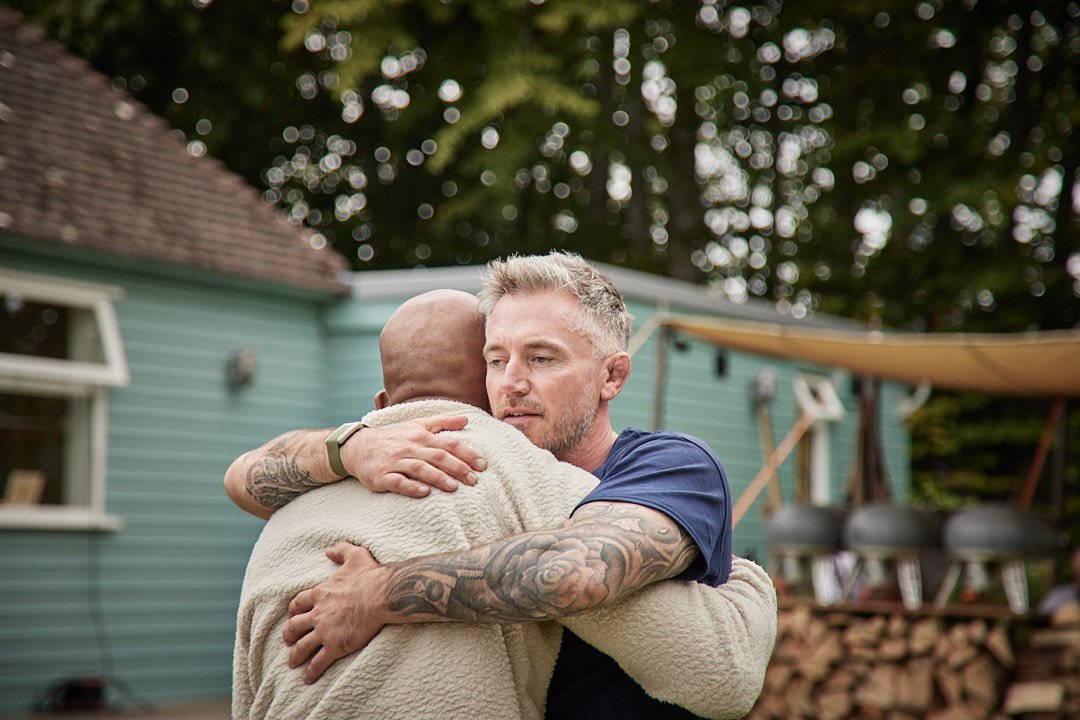
I hugged him afterwards and kissed him on the cheek.

I told him I was proud of him.

Another friend of ours had travelled four and a half hours by train to be there too.

No posts.
No announcements.
No “busy mate but I’ll catch up with you later”.

Just showing up.

This is what discipline looks like when it actually matters.

Not productivity.
Not performance.

Presence.

Before we go any further, let’s take a moment to debrief together:

Over the past week, or even the past year, where have you meant to show up for someone, but let it slide because something else felt more urgent?

Not because you didn’t care.
But because life made it easy not to be there.

No judgement.
Just signal.

We’re often disciplined with our work, our training, our schedules.

But relationships don’t survive intentions.
They survive action, often.

Showing up when it’s inconvenient.
Prioritising people over tasks.
Keeping the circle small and, most importantly, tight.

This is the kind of discipline that doesn’t get noticed straight away.

But over time, it’s the difference between isolation and connection.

Between knowing people and being known.

If last week was about noticing where standards soften, this week is about where they matter the most.

Your mission this week:

Reach out to one person who matters to you.
Not to ask for anything.
Not to fix anything.
Just to be there.

Then do it again.

Be there.

It matters more than you’ll ever know.

That’s enough for now.
More next Sunday.

Mike
Hold the line. Do the hard things.

Read More
Mike Bates Mike Bates

Discipline, and the small things

Discipline, and the small things.

The start of a new year has a way of making everything feel more important.

New plans.
New promises.
Pressure to change things all at once.

That’s rarely how real change happens.

Real change happens when we’re disciplined on the small stuff.

Not the things we announce.
The things no one sees.

As the year turns, I’ve been paying attention to where discipline actually slips.

Not in big, dramatic ways, but in the quiet moments that barely register.

The slightly later start.
The call I said I’d make to a friend, postponed.
The message left unanswered a little too long.

Nothing catastrophic.
Nothing that feels like a failure.

And yet, familiar.

Before we go any further, let’s take a moment to debrief together:

When you reflect on last year, where did you notice yourself letting the small things slide? - not because it didn’t matter, but because it felt inconsequential.

No judgement.
Just signal.

This is how discipline actually erodes.
Not through rebellion.
Through tolerance.

What you allow once becomes easier to allow again.
Over time, the line moves and you barely notice it’s gone.

I see this most clearly in my closest connections.

The conversations I intended to have. The regular check-ins that matter. Nothing breaks when I delay them.

But something inside me shifts.

Distance creeps in where it doesn’t belong.

Discipline isn’t about intensity.

It’s about maintenance.

About noticing the moment you’re about to negotiate with yourself, and choosing not to.

Your mission this week:

Identify one small standard you allowed to soften last year.
Restore it quietly.
Then keep it where it belongs.

That’s enough for now.
More next Sunday.

Mike
Hold the line · Do the hard things

Read More